


The volunteers who rescue stranded Manx shearwaters across Pembrokeshire are raising £4,000 to replace the cardboard boxes they carry birds in with purpose-made, reusable carriers. Every autumn they pick up hundreds of young shearwaters that have come down on the mainland and can’t take off again – more than a thousand in 2025 – and every one of those birds travels to its release point in a box. The cardboard isn’t up to the job any more. This is what the appeal is for, why it matters, and what to do if you find a grounded shearwater yourself.
What the money buys
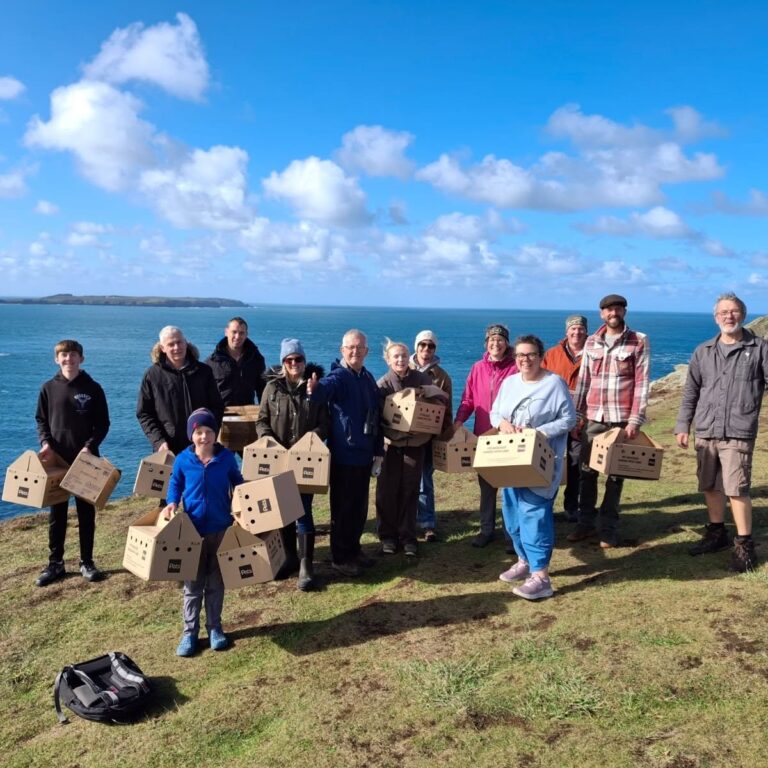
At the moment birds are collected in cardboard boxes and driven to coastal release points. That worked when the numbers were small. With over a thousand birds a season, some picked up off wet beaches in a gale and some released from boats, cardboard goes soft in rain and sea spray and doesn’t last. It also can’t be properly cleaned between birds, which is a disease risk when inevitably boxes have to be reused.
A specialist company has designed a reusable carrier in Correx – a rigid, waterproof corrugated plastic that can be washed down between birds. Once the one-off tooling cost is covered, each box costs about £10. So £10 buys a box that should see out many seasons, rather than one that is finished after a wet night.
Where the appeal stands
The group has teamed up with St Davids community organisation EcoDewi to run the appeal through Localgiving. Manx Shearwater Rescue is independent of EcoDewi, and all the money raised goes to the rescue group.
At the time of writing (30 September 2026), 37 donors had given £1,560 towards the £4,000 target – a little under 40%. The fledging season runs until mid-October, so the boxes are needed for next year.
Why the boxes get so much use
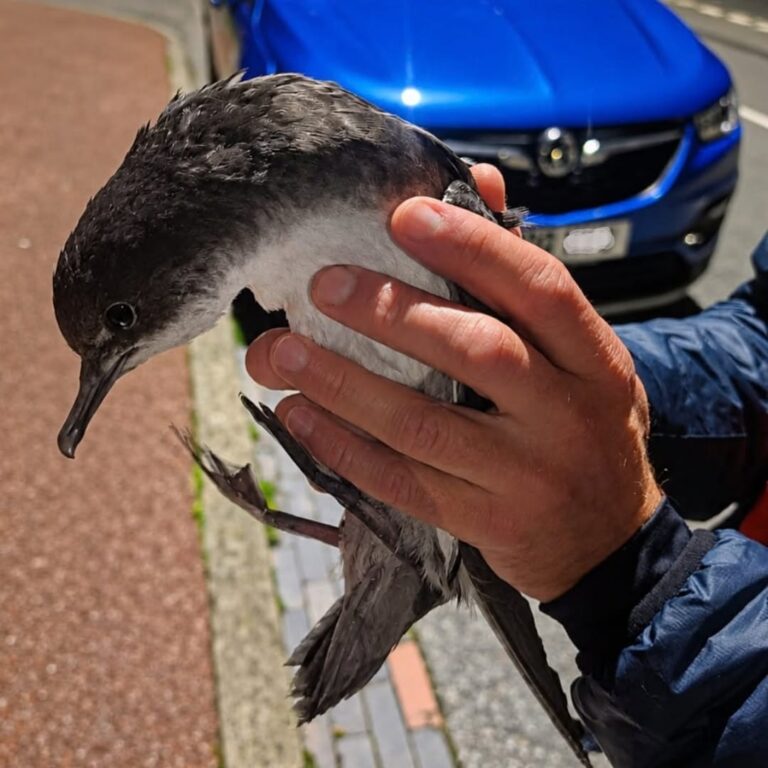
Pembrokeshire’s islands hold more than half the world’s Manx shearwaters in the breeding season. Skomer alone has around 350,000 pairs. Adults only come ashore at night, to avoid the gulls, so most people never see them.
The trouble starts when the chicks fledge, from mid-August to mid-October. They leave the burrow at night and head for open water, and some are confused by artificial light on the mainland or blown ashore by strong winds. They end up on beaches, roads, car parks and gardens. A shearwater is built for the sea, with legs set so far back it can barely walk, and it needs the sea or a cliff edge to get airborne. On flat ground it is stuck, and easy work for a gull, a cat or a car.
The hotspots are Newgale, Broad Haven, the Milford Haven Waterway and Tenby. Storms make it worse: in 2025 two mass strandings, on 31 August-1 September and 15-16 September, put about half the season’s birds on the shore around St Brides Bay, and volunteers were collecting up to 200 a day off the beaches.
The Manx Shearwater Rescue group
Manx Shearwater Rescue is a volunteer community project that runs through the fledging season, organised through its Facebook group. Members of the public report grounded birds, volunteers collect them, and the birds are checked, boxed and taken to release points where they can get away safely.
The numbers have grown quickly. Volunteers picked up more than 450 stranded birds in 2024. In 2025 the total was 1,147, of which 97% were fit to be released, with around 500 people helping at some point during the season. Pembrokeshire County Council, the Wildlife Trust of South and West Wales, RSPB Cymru and the National Park have all backed the effort.
Mark, who runs Tenby Adventure, is a member of the group, which is how this post came about.
If you find a stranded shearwater
- Don’t put it on the sea or throw it into the air. It can’t take off from flat ground, and a fledgling dropped on the water is likely to be taken by gulls.
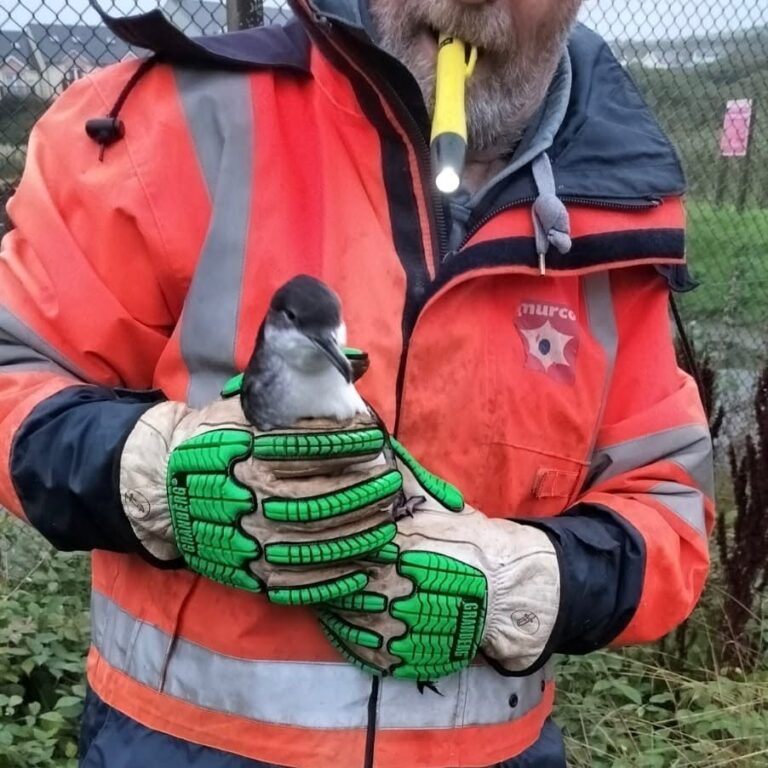
- Pick it up carefully, ideally wearing gloves or using a towel. The bill is hooked and they do bite.
- Put it in a well-ventilated cardboard box, close the lid, and keep it somewhere quiet and dark, away from pets and children.
- Don’t try to feed it or give it water.
- Get in touch with the rescue. Post in the Manx Shearwater Rescue Facebook group or call 01437 723193, the number Pembrokeshire County Council publishes for stranded shearwaters. Note where you found the bird. A volunteer will collect it or tell you where to take it.
- Leave the release to the volunteers. They know where and when a bird has the best chance of getting away.
Back to sea
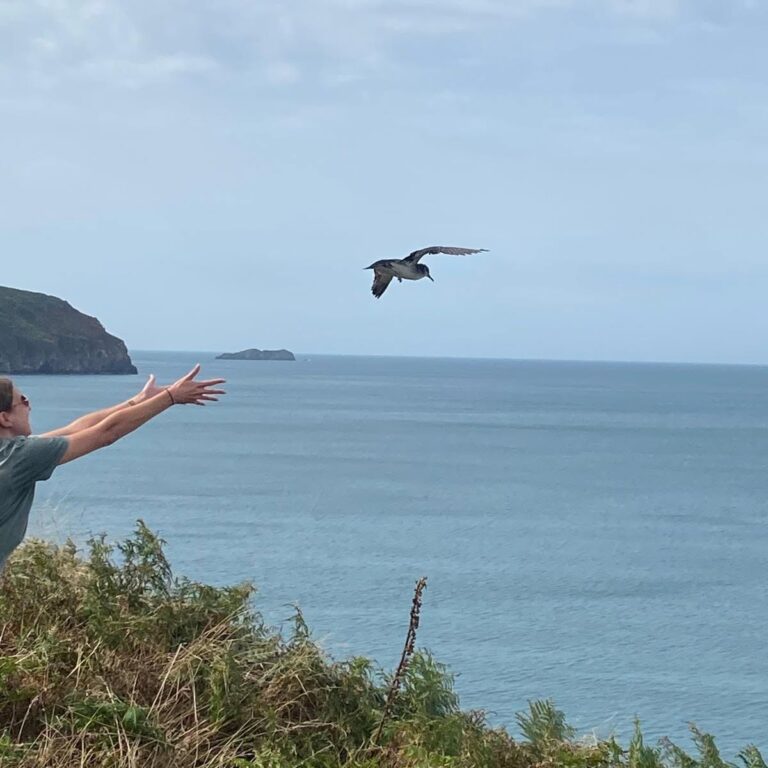
Released from a height, with the sea below, a shearwater does what it couldn’t do from a pavement: it gets into the air and goes. From Pembrokeshire it heads for the waters off South America for the winter, and if it survives, it will be back on the islands in a few years to breed.
Other ways to help, besides a donation:
- Turn lights off. From August to October, switch off outdoor lights you don’t need and draw the curtains in the evening, particularly anywhere with a view of the sea.
- Drive slowly on coast roads at night during the fledging season – Newgale especially.
- Join the group. Rescues depend on people being in the right place late at night, so the more members spread along the coast, the better.
Birds also get caught up in lost fishing line and netting along this coast. Our Ghosteering project recovers that gear from the shore and the sea, and has freed 18 entangled birds over the last five years.