



Ghosteering
Coasteering with purpose: 'ghost' (lost fishing) gear comes out of the sea with us.
What is ghost gear?
Lost and abandoned fishing gear – nets, pots, line, rope – doesn’t stop working when it’s lost. It keeps on fishing, for years, catching seals, birds, crabs and fish. It’s among the most harmful marine litter there is, and with the prevailing onshore winds the South Pembrokeshire coastline collects more than its share.
We probably spend more time in the caves, gullies and tidelines of this coastline than anyone, so we see where ghost gear ends up. We can’t leave it there and so have collected HUNDREDS of bits of line, stray hooks and tackle over the years – we could’ve opened a tackle shop with the stuff we’ve recovered. We often come across larger masses of net and rope – sometimes these require some planning to recover but as outdoor professionals the opportunity to deploy ropes, carabiners, z-hoists and prussics in interesting ways is right up our avenue.
There’s a popular misconception that ghost gear is all trawl net. But we often coasteer around popular recreational fishing marks – the same rocky ground that makes for good fishing snags tackle constantly, so anglers lose line, hooks and weights in large quantities. In the last five years we’ve picked hundreds of bits of line, hooks and tackle out of the rocks, and freed entangled birds and fish. We’ve seen several seals with line wrapped around them and hoped they somehow managed to remove it (it’s extremely difficult to help a seal in this situation).
We’d be dishonest if we didn’t admit to some frustration at a recreational activity that leaves specifically harmful plastic waste in the environment it takes place in…
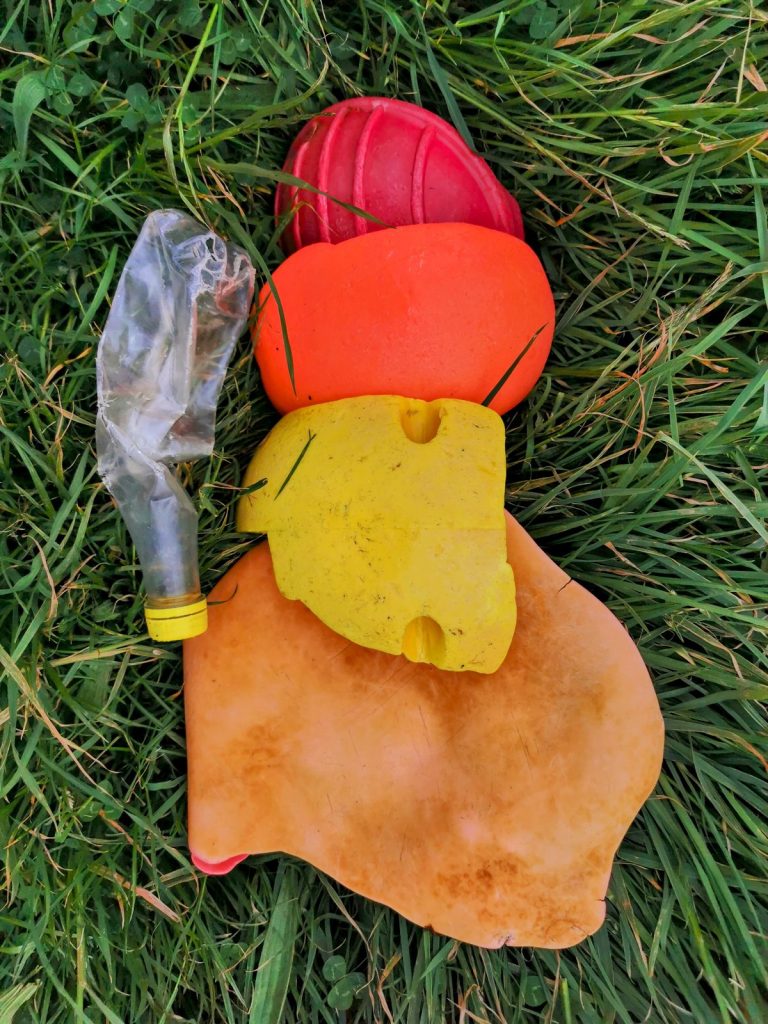
Something we’ve always done
Collecting ghost gear has been part of a Tenby Adventure trip for as long as there have been Tenby Adventure trips. If a guide spots a snagged pot, or a length of trawl net wedged in a gully, a set of mackerel feathers or a length of tangled line and it’s safe to recover it, out it comes – strapped to a kayak, stuffed in a dry bag, or hauled up a climb. We call this sub-mission of ours: Ghosteering.
Every coasteering session and kayak trip is a potential Ghosteering trip. If we find gear that’s safe to carry, we bring it out, and guests are welcome to lend a hand. If you come for the jumps and the caves; you might go home having helped carry a killer net off the coastline.
Where the gear goes: nets become kayaks
Usable material we recover goes to Odyssey Innovation’s Net Regeneration Scheme collection point at Milford Haven, where recovered fishing gear is recycled into new things – including kayaks. The scheme is endorsed by the Global Ghost Gear Initiative and was rolled out along the Welsh coastline with Welsh Government backing. We like the arithmetic of it: nets that spent years quietly fishing on their own end up as boats.
What we’d love next is the full circle – our kayaks made from ghost gear we recovered ourselves. We’re working on it – our plan is to replace our non-recycled boats, but only as they expire (it’s an often over-looked element of sustainability that the most sustainable thing you can do is Keep What You Have!). This winter is when we push for it – see below.
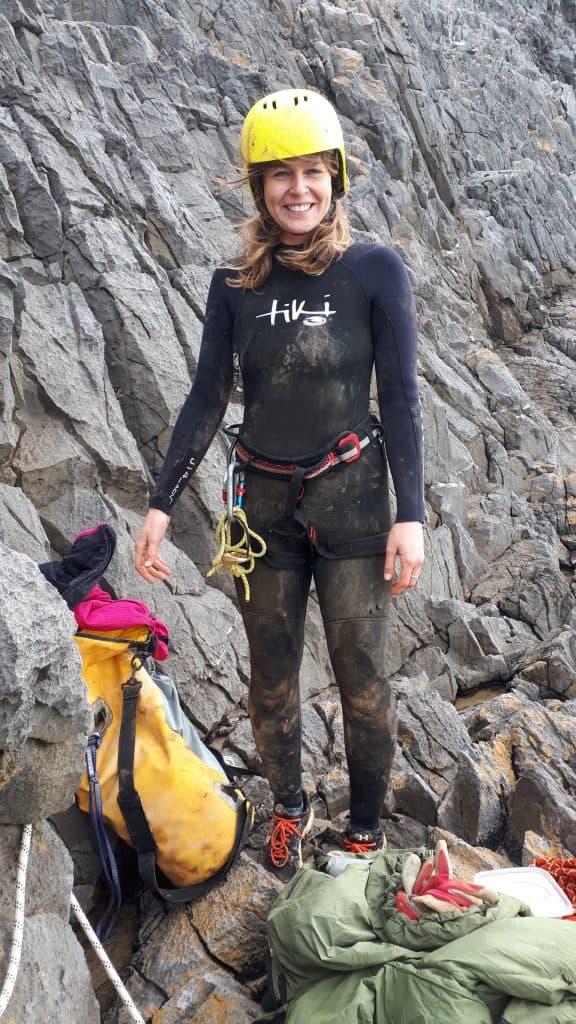
The big one
We know where a big one is: a massive bundle of tangled net, rope and gear on the coastline near Bullslaughter Bay. It’s too much for a casual haul, so it needs a proper plan – the right tides, the right sea state, the right season for the wildlife, and the right permissions (it’s on the Castlemartin Range, where access is restricted, so please don’t go looking for it).
When we get the green light, it’ll be our biggest recovery yet. We’ll report back!
This winter: help us find it
When the season finishes at the end of October, Ghosteering stops being a side-mission and becomes our winter project. Our guides will run dedicated recovery trips along the South Pembrokeshire coastline – the same people, ropes and hauling kit as summer, just with fewer guests and more net. The bundle near Bullslaughter Bay is on the list, tides, sea state and permissions allowing.
The aim is boats. Allowing for what’s lost in recycling, it takes about 50kg of recovered gear to make one kayak through Odyssey Innovation’s scheme. We want to recover enough that every boat we replace as our current fleet wears out is matched, kilo for kilo, by gear we pulled off this coastline ourselves.
Found ghost gear?
We can’t be everywhere, and plenty of people walk the Coast Path more often than we do. If you find ghost net, rope or tangled fishing gear on the South Pembrokeshire coastline, WhatsApp us a photo and the location on 07880 746892 – a dropped pin or what3words is ideal, plus a rough idea of size. Or just call the same number. We’ll take a look and, if it’s recoverable, add it to the list.
Please leave the recovering to us – a lot of it sits in places that need ropes and the right tide. If there’s a seal, bird or other animal still tangled in it, call British Divers Marine Life Rescue on 01825 765546 or the RSPCA on 0300 1234 999 first.
Come and lend a hand
Every booking keeps a team of habitual coast-cleaners on the water. Come coasteering or kayaking with us and you’re already part of it.